

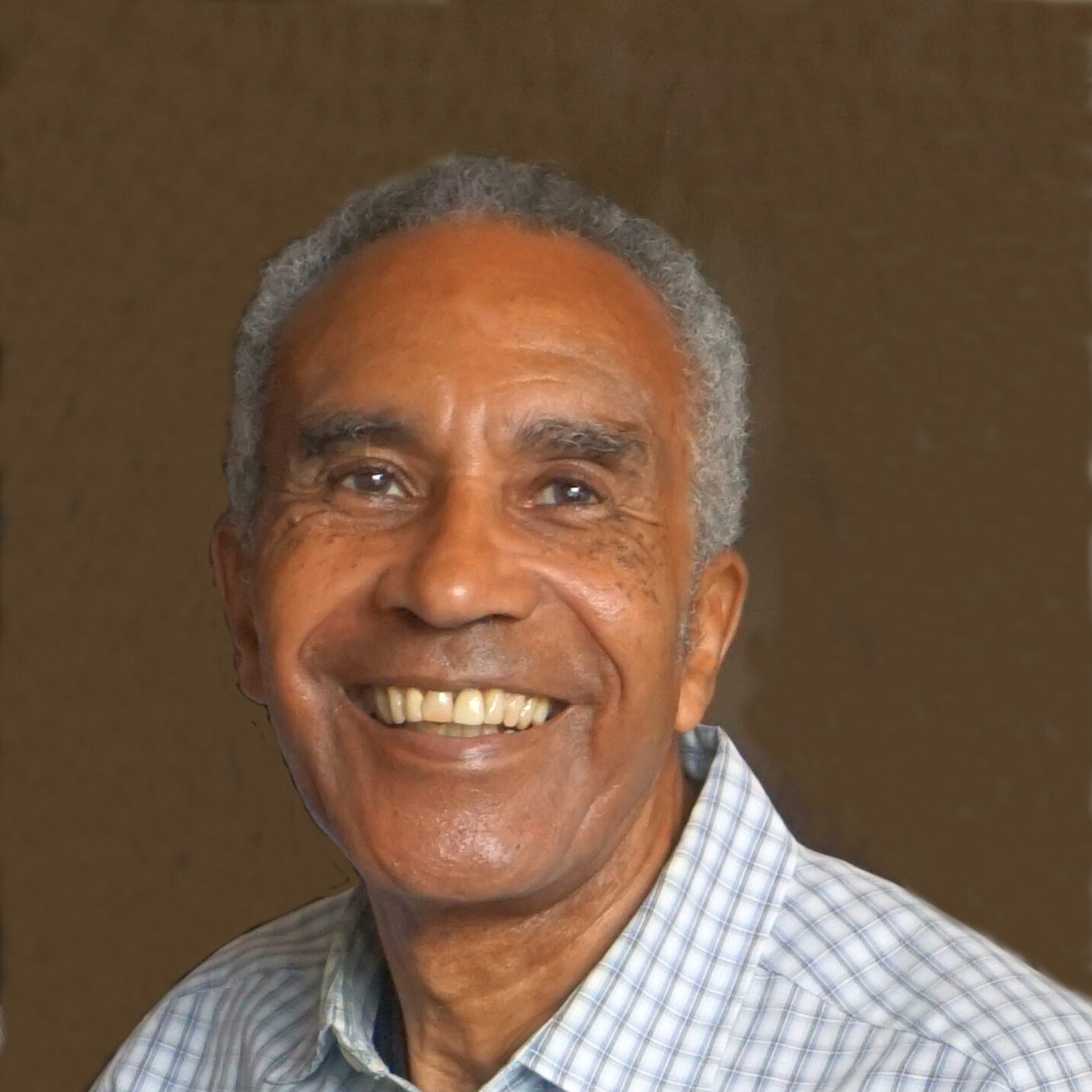
Originally published on the official St. Stanislaus College Facebook page on October 24, 2026, by the Journalism Club as Feature Two of its 160th Anniversary Interview Series. View the original post.
Thousands of miles separate Guyana from Canada, but for Mr. Alfred Carr, the distance has never weakened his connection to St. Stanislaus College.
More than six decades after leaving its classrooms, the former student continues to play an active role in supporting the institution that helped shape his early years. As Chair/President of the St. Stanislaus College alumni organisation in Toronto, Carr has helped sustain a relationship between generations of Saints, ensuring that geographical distance does not become a barrier to service.
His journey, however, is about much more than alumni involvement. It is the story of a young man whose education was interrupted by national unrest, who ventured overseas in search of opportunity, built a varied professional career and eventually devoted his experience to supporting the school where it all began.
As St. Stanislaus College celebrates its 160th anniversary, the Journalism Club's second feature explores the experiences, decisions and relationships that have defined Mr. Carr's journey.
In 1957, Alfred Carr entered St. Stanislaus College, beginning seven years that would leave a lasting impression on his life.
His education unfolded during a turbulent period in Guyana's history. A general strike disrupted the country and cost him one year of his seven-year public school scholarship. With his family unable to afford the fees for an additional year, the interruption presented a significant obstacle.
Despite the setback, Carr continued his education through Sixth Form, completing both lower-level and A-Level qualifications.
Although he was more inclined towards the arts than Mathematics and Science, he possessed an exceptional ability to retain information.
One classroom experience remained particularly memorable.
When a teacher expressed doubt that he would pass Physics, Carr confidently responded, “I will.”
Drawing upon what he described as a photographic memory, he recalled being able to visualise pages from his Physics textbooks during examinations, reproducing the information he had studied.
He ultimately passed.
It is a small but revealing moment in his school story, offering a glimpse of the confidence and determination that would later accompany him through more demanding challenges.
For Carr, the value of his education was not confined to academic achievement.
In 1959, he became one of the original scouts involved in establishing the College's Scout troop, serving as its troop leader. Two years later, in 1961, the troop travelled to Trinidad, an especially memorable experience for boys who, in many cases, had never previously left Guyana.
Scouting introduced Carr to practical skills, leadership responsibilities and the importance of teamwork. These experiences would later influence his approach to professional and community life.
Equally significant were the relationships he developed.
Among those who left a lasting impression was Father Herbert Feeny, whom Carr remembered as a patient and knowledgeable priest.
Their connection extended well beyond his school years. When Carr decided to migrate to Canada, Father Feeny offered encouragement and support. He would also later conduct Carr's wedding ceremony.
For Carr, relationships such as these reflected something important about the education he received at Saints. The College, he believed, provided more than academic instruction. It helped establish a moral foundation, encouraging students to distinguish right from wrong and to conduct themselves according to sound principles.
These were lessons he would carry with him long after leaving the College in June 1964.
Carr's professional journey began in banking, where he worked for approximately eighteen months after leaving school.
He soon realised, however, that banking was not the career he wished to pursue.
A conversation with a friend working in accounting introduced him to another possibility. He applied for a position, secured employment with better remuneration and began developing the skills that would influence much of his professional life.
Under the guidance of a supportive supervisor, Carr gained experience in accounting and auditing while learning the importance of responsibility, reliability and maintaining effective professional relationships.
By June 1967, he was ready to make an even more consequential decision.
Against the backdrop of Guyana's political and social circumstances surrounding independence, Carr considered the future he wanted for himself and the family he hoped to raise.
His decision to migrate to Canada was not universally supported by his relatives. Nevertheless, he remained convinced that opportunities awaited him abroad.
Canada, however, did not offer an effortless beginning.
Of the institutions he approached, only one accepted his secondary school qualifications for admission to its accounting programme.
The programme itself was demanding. Spanning five years, it required students to complete professional examinations under a system in which failure in an examination could result in losing an entire academic year.
Carr persevered, and in September 1972, he attained professional accounting status.
What followed was a career that extended well beyond accounting.
Over approximately three decades, he worked across banking, insurance sales, government service, financial administration, technology management and senior project direction.
His responsibilities included management and senior management positions, as well as service as a senior civil servant, where he briefed government ministers and provided factual information and recommendations to assist decision-making.
These experiences strengthened his abilities in administration, financial management and leadership, skills he would eventually bring to an entirely different responsibility: supporting his former school.
Although Carr built his professional life in Canada, St. Stanislaus College remained part of his identity.
That connection would eventually find expression through the work of the Toronto alumni community.
The St. Stanislaus College Alumni Association Toronto (SSCAAT) was incorporated in Ontario in 1994 as a not-for-profit organisation, bringing together former students committed to supporting their alma mater.
Carr did not become involved immediately. For many years, professional and personal responsibilities demanded much of his attention.
Following his retirement, however, he became increasingly involved in the organisation's activities.
He was drawn to its purpose: maintaining the connection between former students and the College while providing practical assistance to an institution that continued to educate new generations.
His professional background made him particularly suited to the organisation's administrative and financial responsibilities.
In 2012, the alumni organisation explored establishing a separate charitable entity capable of issuing donation receipts. For a time, the two organisations operated alongside one another, with Carr serving as treasurer of both.
The arrangement created considerable administrative demands.
Recognising that both organisations were working towards the same objective, Carr supported the consolidation of their efforts, allowing members to direct more of their time and resources towards assisting Saints.
His involvement eventually developed into his present leadership role as Chair/President of the alumni organisation.
The work of the Toronto alumni community has extended beyond maintaining friendships and organising gatherings among former students.
Over the years, its fundraising initiatives have contributed to repairs, institutional improvements and other needs at St. Stanislaus College.
As circumstances changed, so did the nature of that assistance.
During the COVID-19 pandemic, when schools faced the challenges of delivering education remotely, the alumni organisation provided support for online learning.
More recently, it contributed towards the College's breakfast programme when the Parent-Teacher Association was unable to meet the full costs independently.
These initiatives demonstrate the practical importance of maintaining an active alumni network.
For Carr, the organisation's purpose remains relevant because the needs of students and schools do not disappear with the passage of time.
Facilities require maintenance, educational opportunities continue to evolve and students sometimes need assistance that extends beyond what the school can provide on its own.
The Toronto alumni community offers one means of responding to those needs.
Its work also reflects a wider understanding of what it means to remain connected to one's alma mater. Although its members may have established lives and careers far from Guyana, their contributions continue to reach the classrooms and students of Saints.
Having left St. Stanislaus College more than sixty years ago, Carr has witnessed considerable changes in the institution.
The school he attended was a grammar school with traditions and opportunities shaped by the educational system of its time.
Today, it operates as a government secondary school, with a broader student population and an expanding range of activities.
Carr recalled the period when Saints was not co-educational, a reminder of how significantly the institution has evolved.
He also observed that present students have access to extracurricular opportunities that were unavailable during his own school years.
Programmes such as steel pan and the Journalism Club reflect the widening scope of student participation and creative expression.
These developments are particularly meaningful when viewed alongside his own experiences in scouting.
Carr remains a strong advocate for activities that encourage teamwork, cooperation, discipline and responsibility. He considers team sports especially valuable in helping young people learn to work effectively with others.
While the College has changed in many respects, he believes its responsibility to prepare students for life beyond the classroom remains fundamental.
He also values its continuing commitment to providing an education that equips students for higher studies and opportunities both within Guyana and internationally.
For him, progress does not require abandoning the principles that have guided generations of Saints. Rather, the challenge is to preserve those principles while responding to the needs of a changing world.
As the College celebrates 160 years of education, Carr's attention is not confined to its history.
He also recognises the importance of preparing younger alumni to continue the work of supporting the institution.
The Toronto alumni organisation has benefited from the commitment of former students who have contributed their time, professional expertise and financial resources. Sustaining that work, however, will require new generations to become involved.
For Carr, the responsibility of giving back should not belong exclusively to those who left Saints decades ago.
Today's students will eventually become tomorrow's alumni, carrying their own experiences, achievements and memories into different communities and professions.
His hope is that they will recognise the value of the education they have received and understand that their connection to the College need not end when they leave its classrooms.
It is a perspective shaped by his own journey, from the schoolboy who helped establish a Scout troop in 1959 to the professional who built a career in Canada and later became a leader within the overseas alumni community.
Throughout those changes, one connection has endured.
Mr. Alfred Carr's story is one of movement across countries, professions and generations.
His journey took him from the classrooms of St. Stanislaus College to the professional world of Canada, where he established a career that demanded adaptability, perseverance and leadership.
Yet, decades after leaving Guyana, his efforts continue to benefit the institution where his education began.
Through the Toronto alumni organisation, he has helped maintain a bridge between former students living overseas and the young people currently walking the corridors of Saints.
As St. Stanislaus College marks its 160th anniversary, that connection carries particular significance. It demonstrates how the influence of a school can extend beyond its physical boundaries and how former students can continue to shape its future long after their own schooldays have ended.
For Alfred Carr, Canada became the place where he built his professional life, but St. Stanislaus College remains an institution to which he continues to give his time and service.
More than six decades and thousands of miles later, the connection remains.
